

For the English version scroll down
Scarica il programma / Download the program
Torna la collaborazione tra Romaeuropa e Accademia Tedesca Roma Villa Massimo all’insegna della musica contemporanea. Al centro della scena, il Decoder Ensemble, fondato nel 2011 ad Amburgo dal compositore e pianista Andrej Koroliov (vincitore del Premio Roma Villa Massimo 2020/21 e Rome Prize Fellow Villa Massimo 2020/21), è oggi considerato tra gli ensemble più innovativi e versatili dell’attuale panorama europeo.
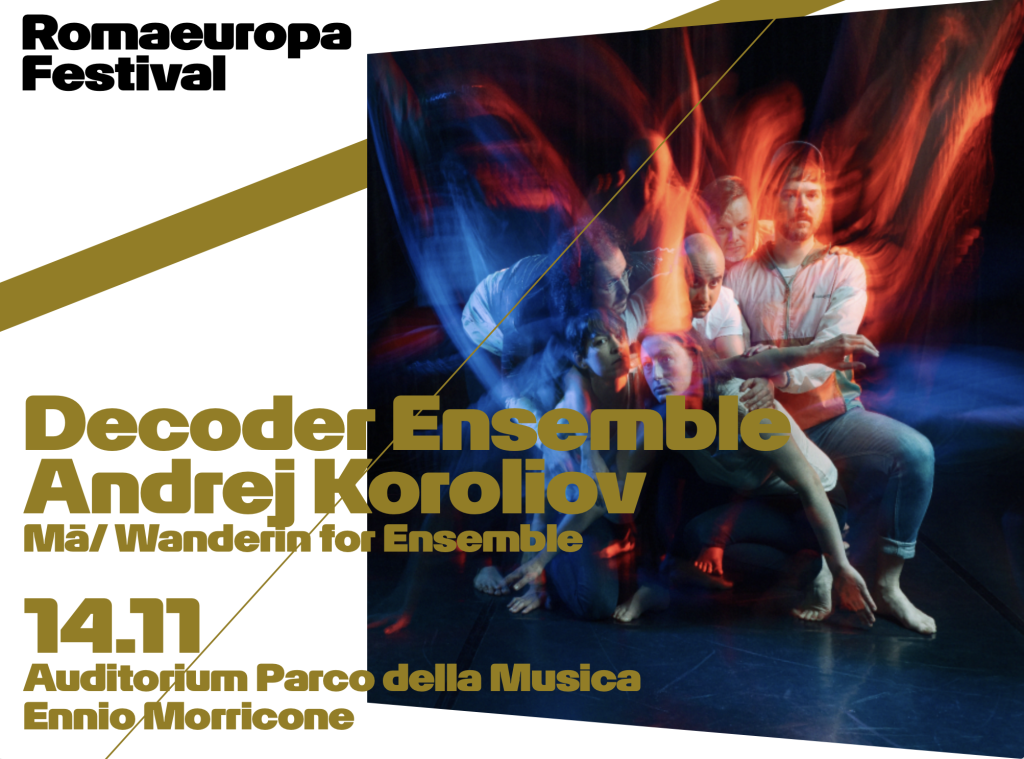
Ma/Wanderin for Ensemble è un percorso sonoro che attraversa stati emotivi profondi, muovendosi tra smarrimento, rivelazione e rinascita. L’opera trae ispirazione da Il castello interiore di Teresa d’Avila, un testo che descrive il viaggio dell’anima attraverso sette “appartamenti interiori”, fino al raggiungimento di una forma di perfezione spirituale.
Al centro del concerto, l’immagine potente della metamorfosi: la crisalide che muore perché possa nascere la farfalla. Una trasformazione che non è solo simbolo mistico, ma anche movimento interiore, passaggio da un sé che si dissolve a uno che finalmente si apre.
Questa idea di cambiamento risuona anche nella cultura Zen, nel concetto di Ma: il vuoto pieno di possibilità, lo spazio sospeso che precede la rivelazione. Un momento di silenzio che non è mancanza, ma attesa, tensione creativa, ascolto.
In sala, la musica del Decoder Ensemble diventa dunque un’esperienza fragile, profonda, necessaria.
Ma/Wanderin: Soundscapes of Metamorphosis
The collaboration between Romaeuropa and Accademia Tedesca Roma Villa Massimo returns under the sign of contemporary music. At the center of the stage is the Decoder Ensemble, founded in 2011 in Hamburg by composer and pianist Andrej Koroliov (winner of the Rome Prize Villa Massimo 2020/21 and Rome Prize Fellow Villa Massimo 2020/21), and today recognized as one of the most innovative and versatile ensembles on the European scene.
Ma/Wanderin for Ensemble is a sonic journey through deep emotional states, moving between disorientation, revelation, and rebirth. The work draws inspiration from The Interior Castle by Teresa of Ávila, a text that describes the soul’s passage through seven “interior chambers,” leading to a form of spiritual perfection.
At the heart of the concert lies a powerful image of transformation: the chrysalis that must die for the butterfly to emerge. A metamorphosis that is not only a mystical symbol, but also an inner movement — a passage from a self that dissolves into one that finally opens.
This idea of change also resonates within Zen culture, in the concept of Ma: the empty space full of possibility, the suspended interval that precedes revelation. A moment of silence that is not absence, but waiting — creative tension and attentive listening.
In performance, the music of the Decoder Ensemble becomes a fragile, profound, and necessary experience.