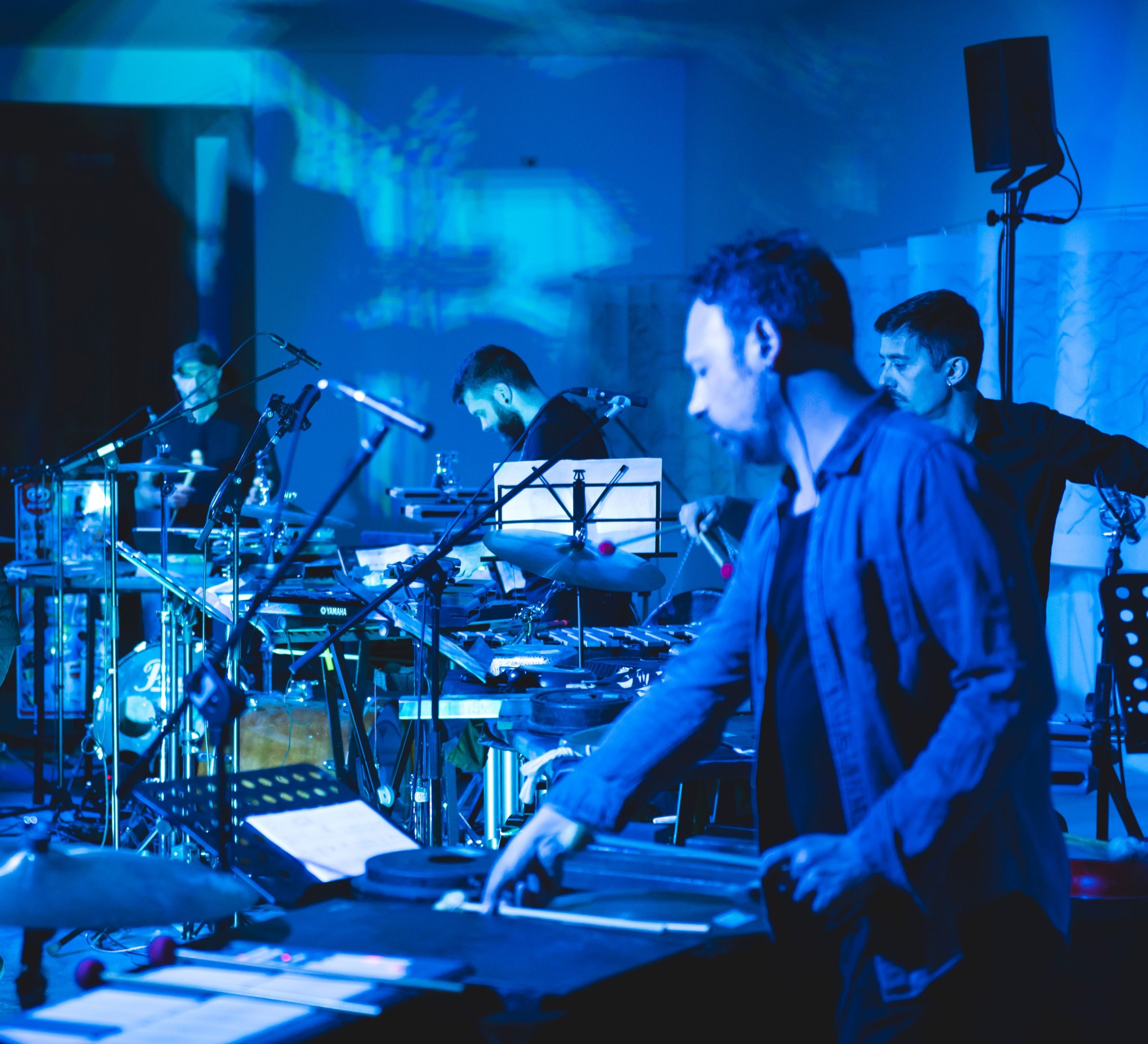



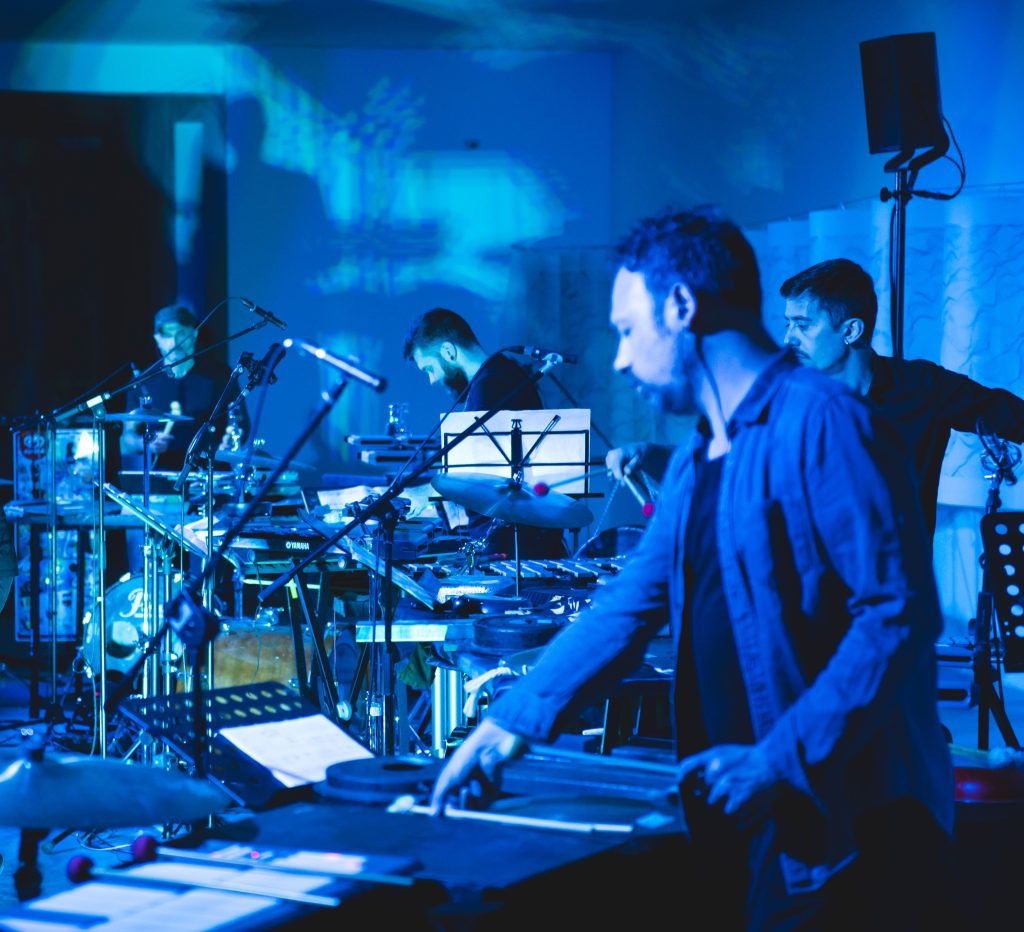
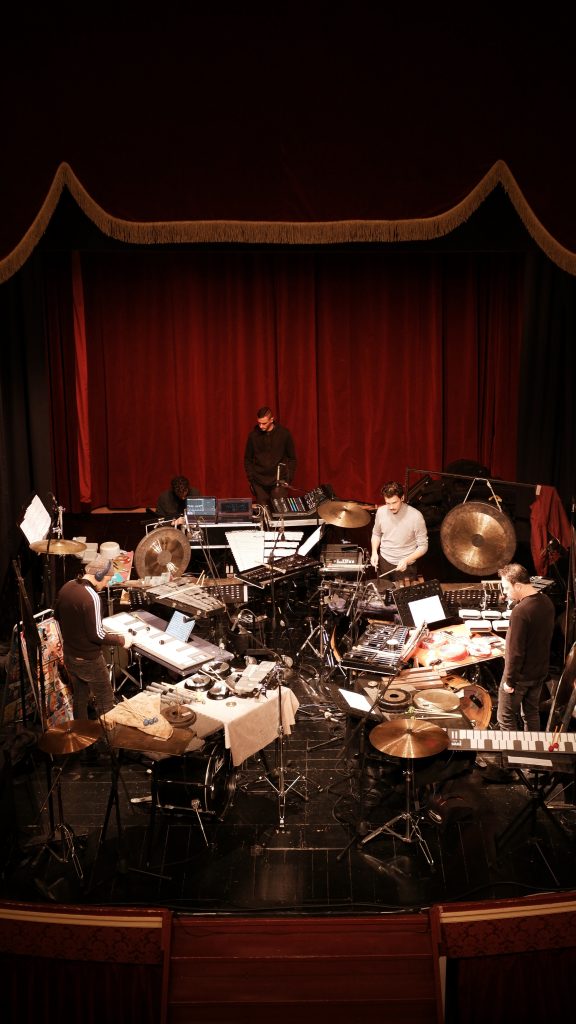
Romaeuropa Festival and the American Academy in Rome have invited Blow Up Percussion to perform Field of Vision in Italy for the first time, a composition for 40 percussionists by American composer Michael Gordon. The work transforms the percussion ensemble into a true collective sonic organism, exploring complex textures and hypnotic dynamics. Gordon makes use of non-conventional instruments, including industrial metals, gongs, and even automobile brake drums, creating rich and surprising timbres.
Field of Vision is conceived as a spatial and three-dimensional listening experience, in which sound moves through space and engages both listeners and performers in an almost meditative perception. The work is part of a series in which Gordon explores the spatial distribution of instruments, generating an ever-evolving sonic architecture.
For this concert, Blow Up launched an international open call to select percussionists from across Europe, creating a unique collaboration on a continental scale. The project brings together technique, experimentation, and artistic exchange, making the Italian premiere of Field of Vision a landmark event in contemporary music.
Michael Gordon is known for his monumental and immersive works. Decasia, written for 55 retuned instruments arranged throughout a performance space (accompanied by Bill Morrison’s acclaimed cult film), has been presented at the Los Angeles Philharmonic’s Minimalist Jukebox Festival and at London’s Southbank Centre. Timber, a tour de force for percussion sextet performed on amplified microtonal simantras, has been performed on every continent, including by Slagwerk Den Haag at the Muziekgebouw and by Mantra Percussion at BAM. Natural History, a collaboration with the Klamath Tribe’s Steiger Butte Drum, premiered with the Britt Festival Orchestra and Chorus on the rim of Crater Lake, Oregon, under the direction of Teddy Abrams, and is the subject of the PBS documentary Symphony for Nature. Among Gordon’s vocal works are Travel Guide to Nicaragua, an autobiographical choral work for The Crossing; the opera What to Wear with legendary director Richard Foreman; and the film-opera Acquanetta with director Daniel Fish. Recent recordings include Clouded Yellow, the complete string quartets of Michael Gordon performed by the Kronos Quartet.
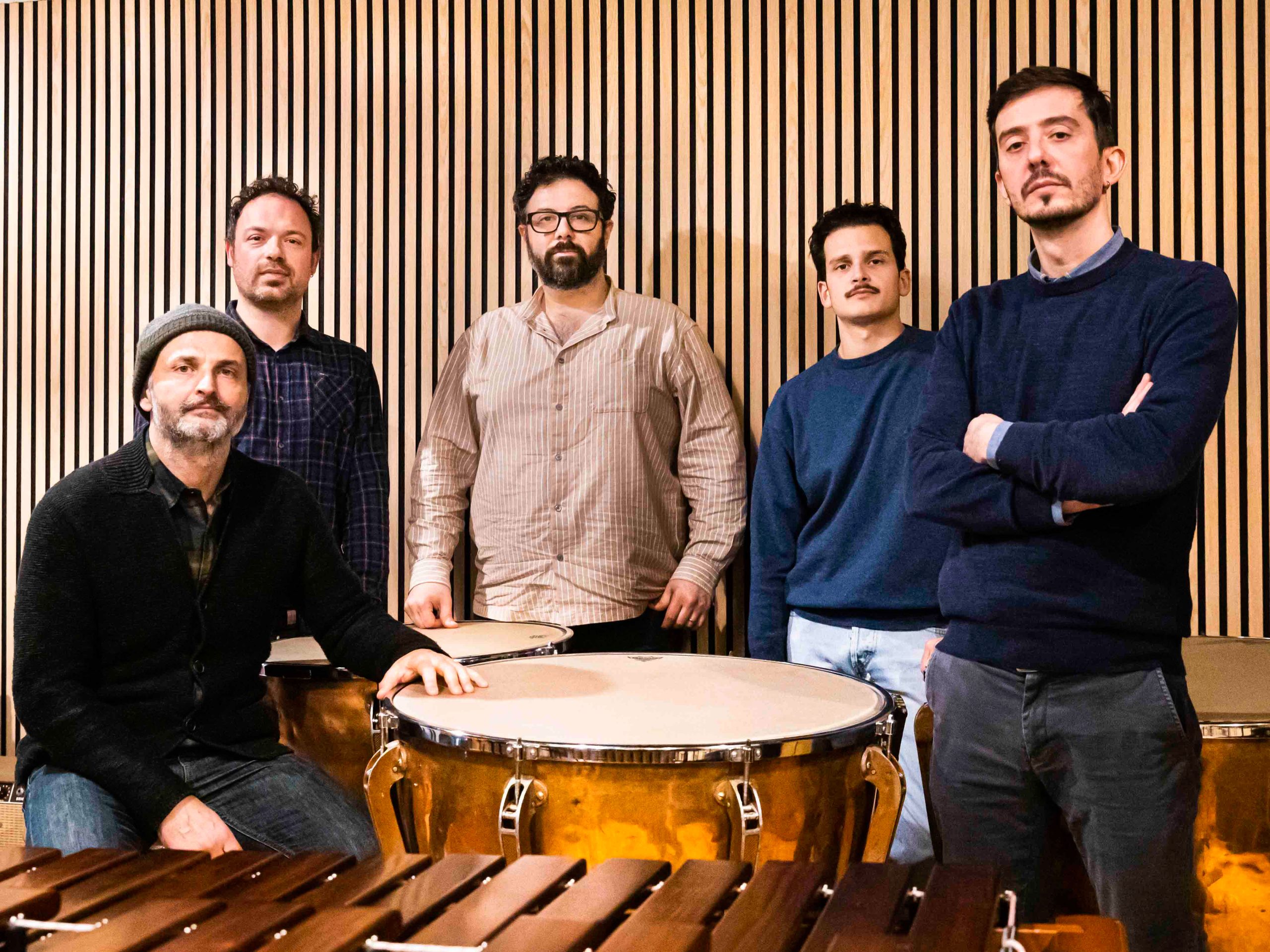
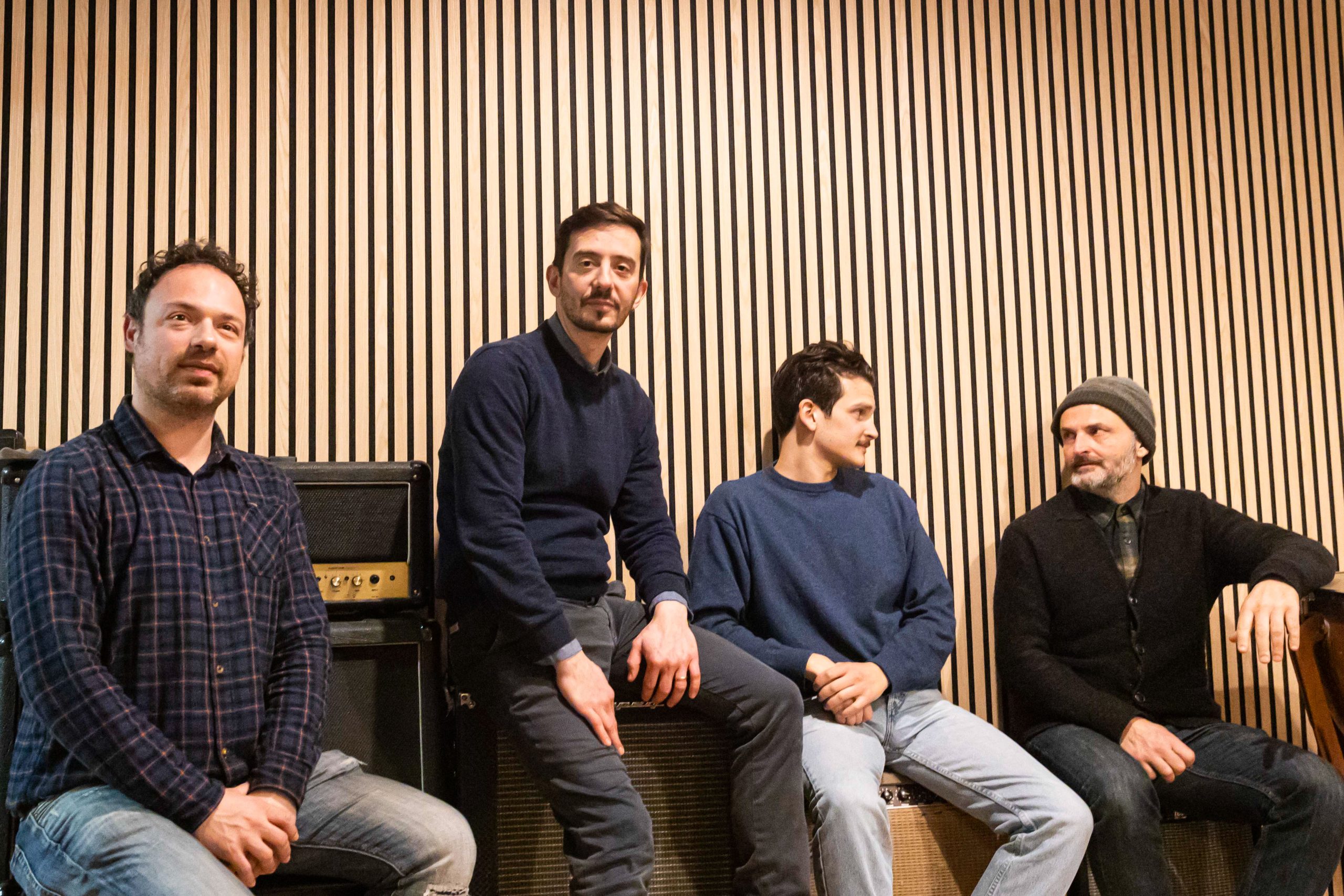
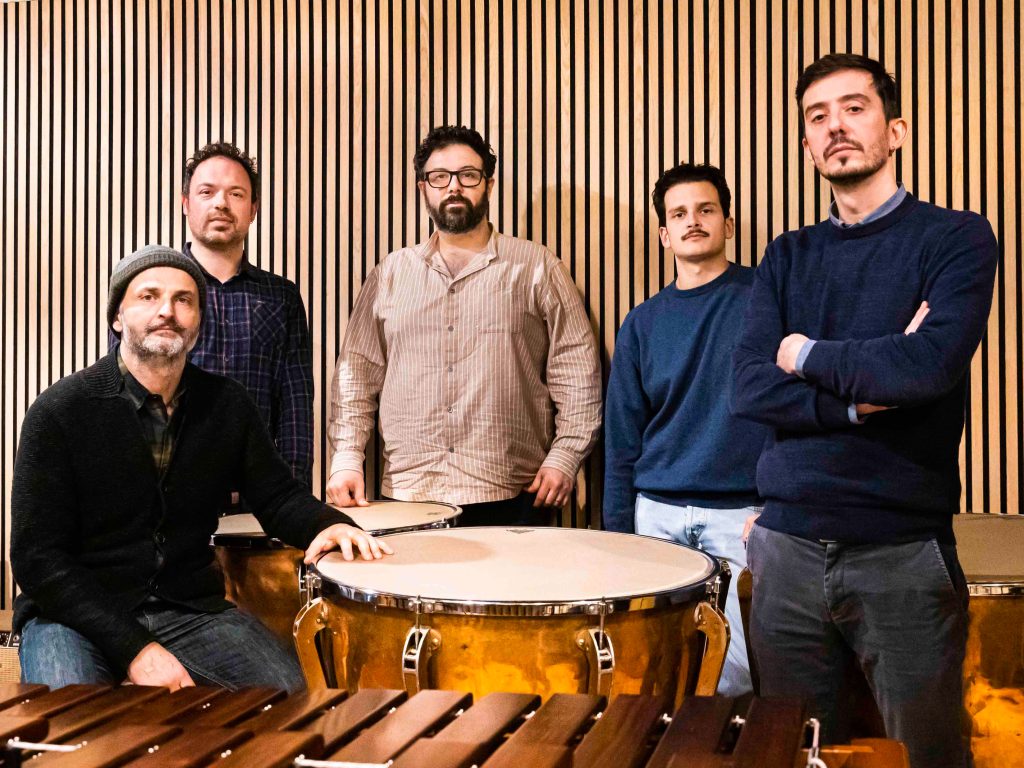
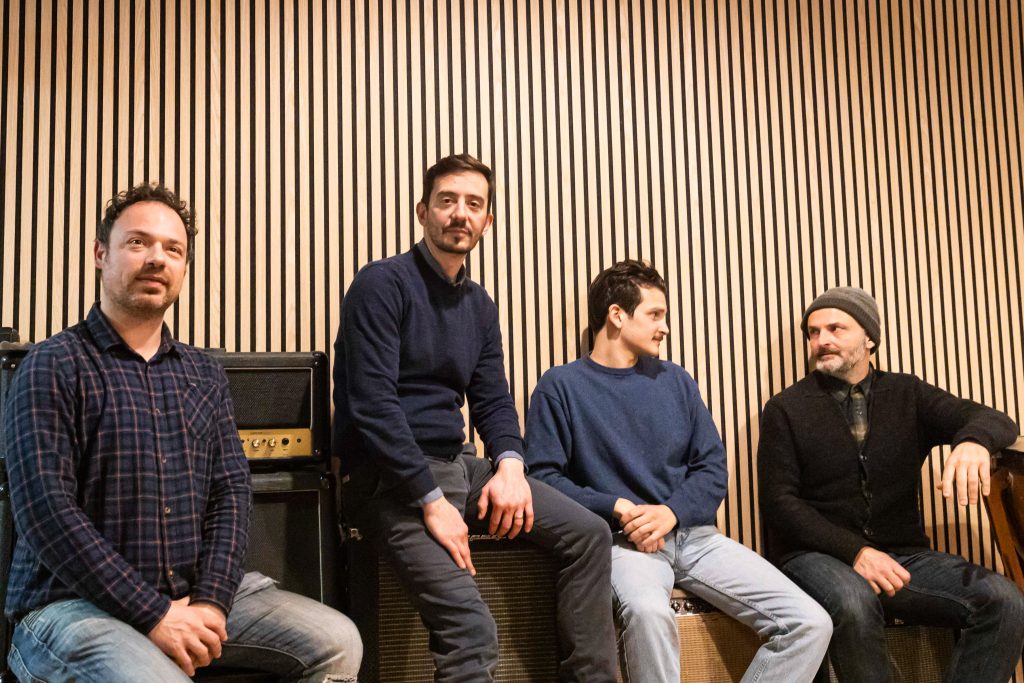
Blow Up Percussion is a percussion ensemble founded in Rome in 2012. Alongside its interpretations of modern and contemporary repertoire, it develops new works through collaborations with composers, ensembles, and musicians from diverse backgrounds. Its collaborators include composers Francesco Filidei, Vittorio Montalti, Bryce Dessner, Christopher Cerrone, Laurent Durupt, Francesco Antonioni, Matteo Tadini, and Evan Nathan; the ensembles PMCE and Prometeo; the London duo Plaid; and cellist Mario Brunello. Within twentieth-century repertoire, the ensemble has become particularly associated with the music of Steve Reich and post-minimalist composers such as David Lang, Julia Wolfe, and John Luther Adams.Together with Vittorio Montalti, Blow Up Percussion created The Smell of Blue Electricity for percussion quartet and electronics, a large-scale work exploring the relationship between electronics and performers. The recording was released by Col Legno in 2024. The ensemble is currently collaborating with Christopher Cerrone, who dedicated the quartet Ode to Joy to them, and has begun recording an album scheduled for release on Neuma Records in 2025.
Since 2019, Blow Up Percussion has also organised the concert series Cerimoniali Ritmici, where the ensemble, together with guest musicians, presents newly commissioned works alongside recent repertoire, offering a window onto the diverse musical aesthetics of our time. The group has performed at Romaeuropa Festival, Ravenna Festival, GRAME Lyon, MITO, MA/IN, Tempo Reale, Nuova Consonanza, Cantiere Internazionale d’Arte, Accademia Filarmonica Romana, L’Arsenale, Traiettorie, Jeans Music Festival, Tenuta dello Scompiglio, Estonian Music Academy, NU Festival, Contemporanea, In My Life, Le Forme del Suono, NO GO, Composit, Half-Die, Non Luoghi Musicali, Fondazione W. Walton, and the concert season of the University of Rome Tor Vergata.
Tonino Battista’s background as both conductor and composer gives him a particularly deep understanding of musical scores from all periods, as well as the ability to engage fluently with contemporary languages, including electroacoustic music and improvisation, establishing him as one of the most versatile conductors on the international scene. After studying piano, composition, and electronic music at the Conservatory of Perugia, he studied conducting with Daniele Gatti and Peter Eötvös. In 1996, at Darmstadt, he won the conducting competition, and Karlheinz Stockhausen named him among his preferred interpreters. From 2000 to 2004 he served as principal conductor of the Kyoto Philharmonic Chamber Orchestra. In 2016 he was appointed resident conductor for contemporary music of the Abruzzo Symphony Orchestra. His recordings include an ECM album featuring music by Stefano Scodanibbio and a Wergo release of Hans Werner Henze’s Concerto for Double Bass and Orchestra. Since 2009 he has been principal conductor and artistic coordinator of the Parco della Musica Contemporanea Ensemble at the Auditorium Parco della Musica in Rome.
Flavio Tanzi is Professor of Percussion at the “G. Briccialdi” Conservatory in Terni. His work is dedicated to the study, research, and promotion of contemporary music. He is the percussionist of both PMCE and Blow Up Percussion and has also collaborated with Algoritmo, AlterEgo, Ars Ludi, Contempoartensemble, Le Balcon, Logos, and MDI Ensemble. He has appeared at numerous international music festivals, and his solo and chamber music activities have enabled him to work closely with composers such as Steve Reich, Giorgio Battistelli, Salvatore Sciarrino, John Luther Adams, Kaija Saariaho, Ivan Fedele, Francesco Filidei, Francesco Antonioni, Vittorio Montalti, Bryce Dessner, and Christopher Cerrone. As an orchestral percussionist, he has collaborated with the Orchestra dell’Accademia Nazionale di Santa Cecilia, Teatro dell’Opera di Roma, the RAI National Symphony Orchestra of Turin, the Orchestra della Svizzera Italiana in Lugano, Teatro Massimo di Palermo, La Fenice in Venice, Teatro Comunale di Bologna, Arena di Verona, and Teatro Petruzzelli di Bari, performing under conductors including Lorin Maazel, Rafael Frühbeck de Burgos, Antonio Pappano, Valery Gergiev, Yuri Temirkanov, Kirill Petrenko, Michael Tilson Thomas, Juraj Val?uha, Myung-whun Chung, Kent Nagano, Mikko Franck, and Yannick Nézet-Séguin. He has also worked extensively in film music alongside Ennio Morricone, Nicola Piovani, Francesco Piersanti, and Paolo Catalano.
director Tonino Battista
percussion coordinator Flavio Tanzi