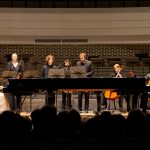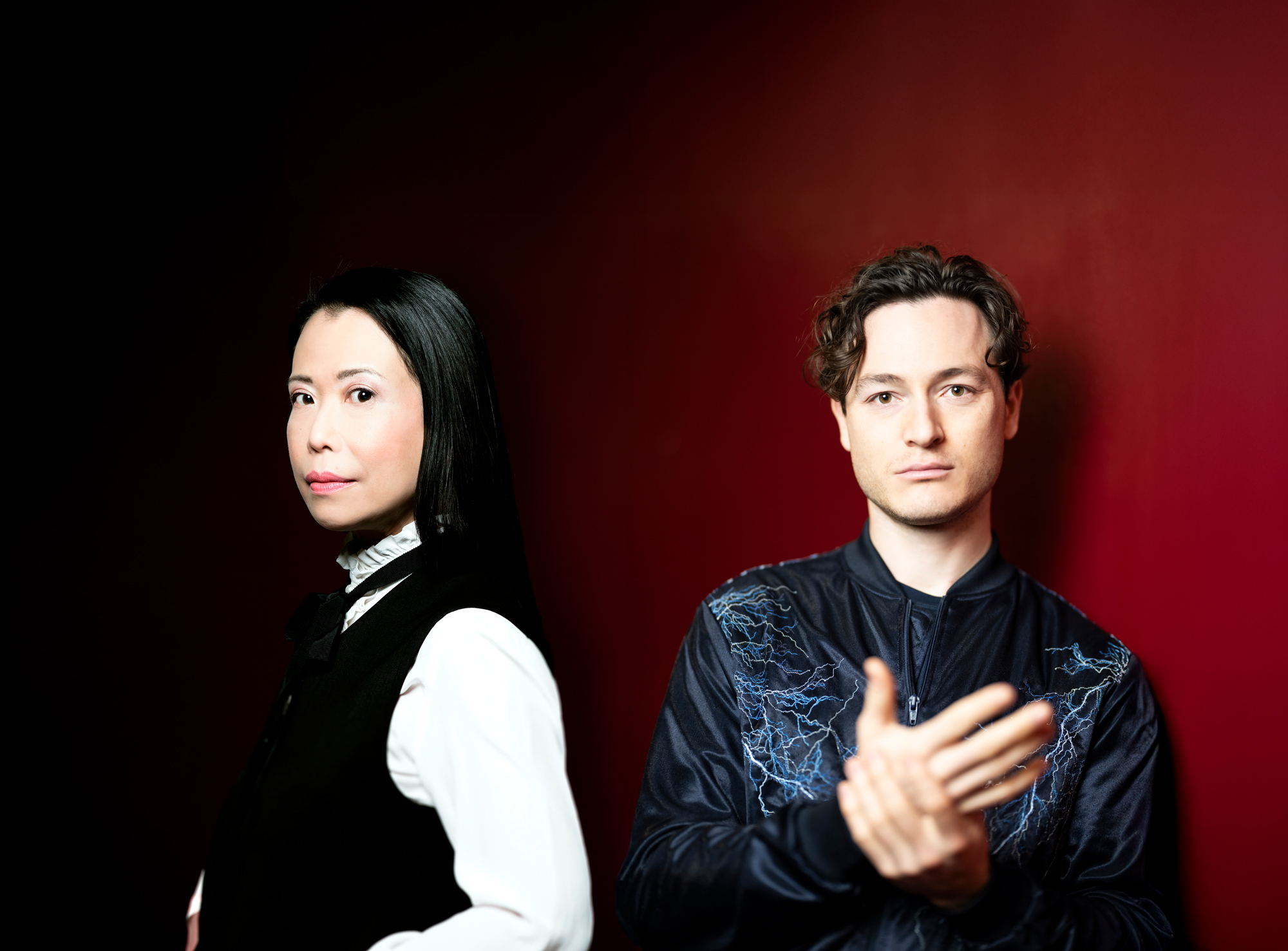



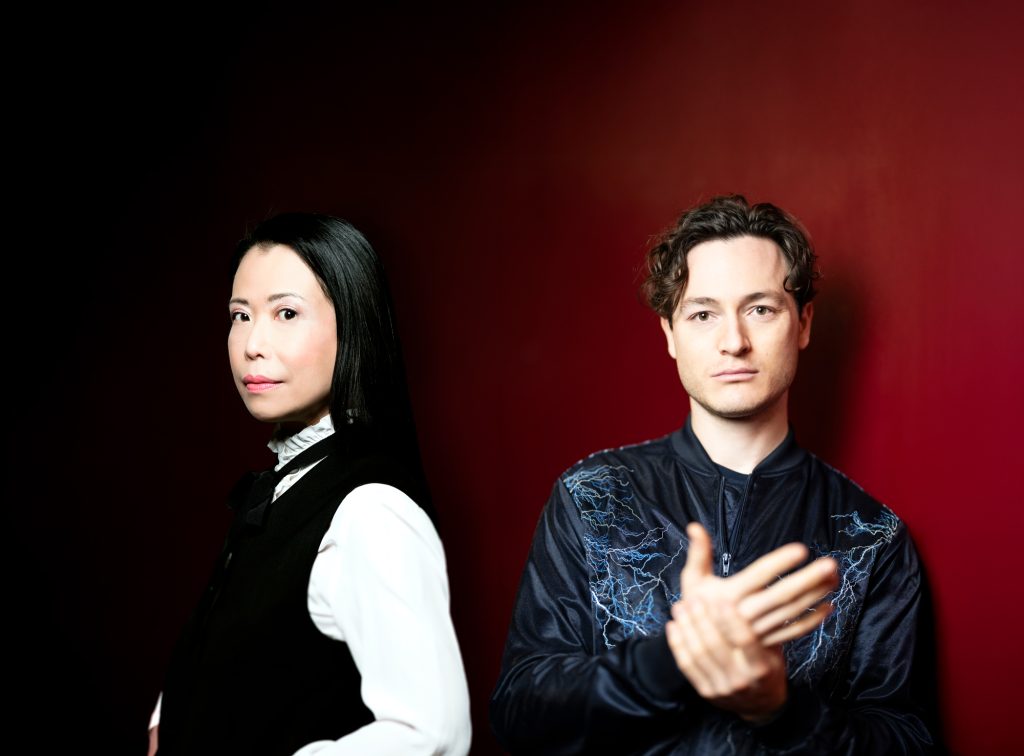
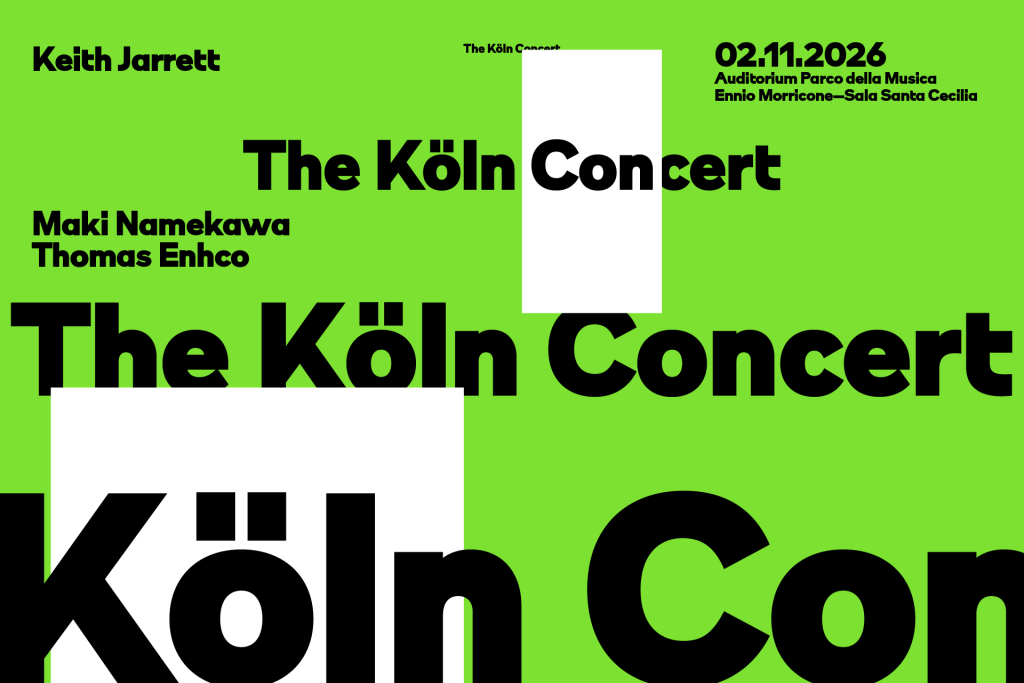
The Köln Concert returns to the stage through two complementary interpretations: Maki Namekawa, a classical performer, plays the first and last sections note for note, while jazz pianist Thomas Enhco improvises around the central section. The performance intertwines fidelity to the score and improvisational freedom, showing how the same music can be read through distinct approaches. The original concert, recorded in Cologne in 1975, was born under difficult conditions: an imperfect piano and technical tensions that Keith Jarrett transformed into four parts rich in recognizable themes and complex variations.
On stage, Namekawa and Enhco restore this structure by alternating rigor and invention, between jazz and classical music. A unique opportunity to engage with one of the most emblematic works in the contemporary piano repertoire.
Thomas Enhco – Piano
Born in Paris in 1988, Thomas Enhco is a jazz and classical pianist and composer. After studying violin and classical piano, he trained in jazz at the Centre des Musiques Didier Lockwood and at the Conservatoire National Supérieur de Musique in Paris. His international career takes him to over 100 concerts per year in jazz festivals and classical concert halls, including Montréal, Tokyo, Montreux, North Sea Jazz, the Philharmonie de Paris, the Mozarteum in Salzburg, and the Théâtre du Châtelet.
Enhco records for Verve, Deutsche Grammophon, and Sony Music. His most recent albums include A Modern Songbook (2023), Thirty (2019), Bach Mirror, and Funambules (2021–2016). As a jazz pianist, he performs in solo, trio, and duo formats, blending improvisation, jazz standards, pop songs, and classical repertoire; as a classical pianist he performs Mozart, Ravel, Gershwin, and his own piano concertos.
As a composer, he has written symphonic works and pieces for piano, chamber orchestra, choir, and wind or string instruments. His awards include the SACEM Grand Prix Jazz (2020), Victoires du Jazz (2013), and Django d’Or (2010). He has collaborated with artists from jazz and classical music such as Jack DeJohnette, Maria João Pires, Maki Namekawa, and many others, developing a cross-genre path that unites technique, improvisation, and experimentation.
Maki Namekawa – Piano
Maki Namekawa is one of the leading pianists of her generation, known for her commitment to four centuries of piano repertoire, from the Baroque period to contemporary composers. She has performed overlooked works by Bach, Mendelssohn, Berg, and Guarnieri, as well as works by contemporary composers such as Philip Glass, Joe Hisaishi, Keith Jarrett, Arvo Pärt, Chen Yi, and Benjamin Yusupov. She performed the world premiere of Philip Glass’s complete Piano Études, together with the composer, as well as Keith Jarrett’s legendary The Köln Concert.
Her award-winning recordings include the Glass Études, Glass’s Piano Sonata, the suite from the film Mishima, Isang Yun’s Sunrise Falling, and Heinz Winbeck’s tribute to Schubert. Her creative collaborations with artists from other disciplines include concerts with Angélique Kidjo and live dance performances with choreographers such as Lucinda Childs and Justin Peck.
Since 2014, together with her husband Dennis Russell Davies, she has presented the project Pianographique, combining piano duo performance with AI- and computer-generated visuals. She regularly performs in major international venues such as Carnegie Hall, Lincoln Center, Walt Disney Concert Hall, Philharmonie de Paris, Musikverein Vienna, Concertgebouw Amsterdam, and Suntory Hall Tokyo, as well as leading festivals including Salzburg, Ars Electronica, Klavier-Festival Ruhr, and the Rheingau Music Festival. In 2017 she received the Piano-Festival Ruhr Prize.
Maki Namekawa piano
Thomas Enhco piano
d’après The Köln Concert – Keith Jarrett (ECM, 1975)
Production Philharmonie de Paris