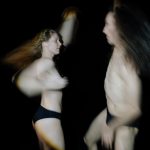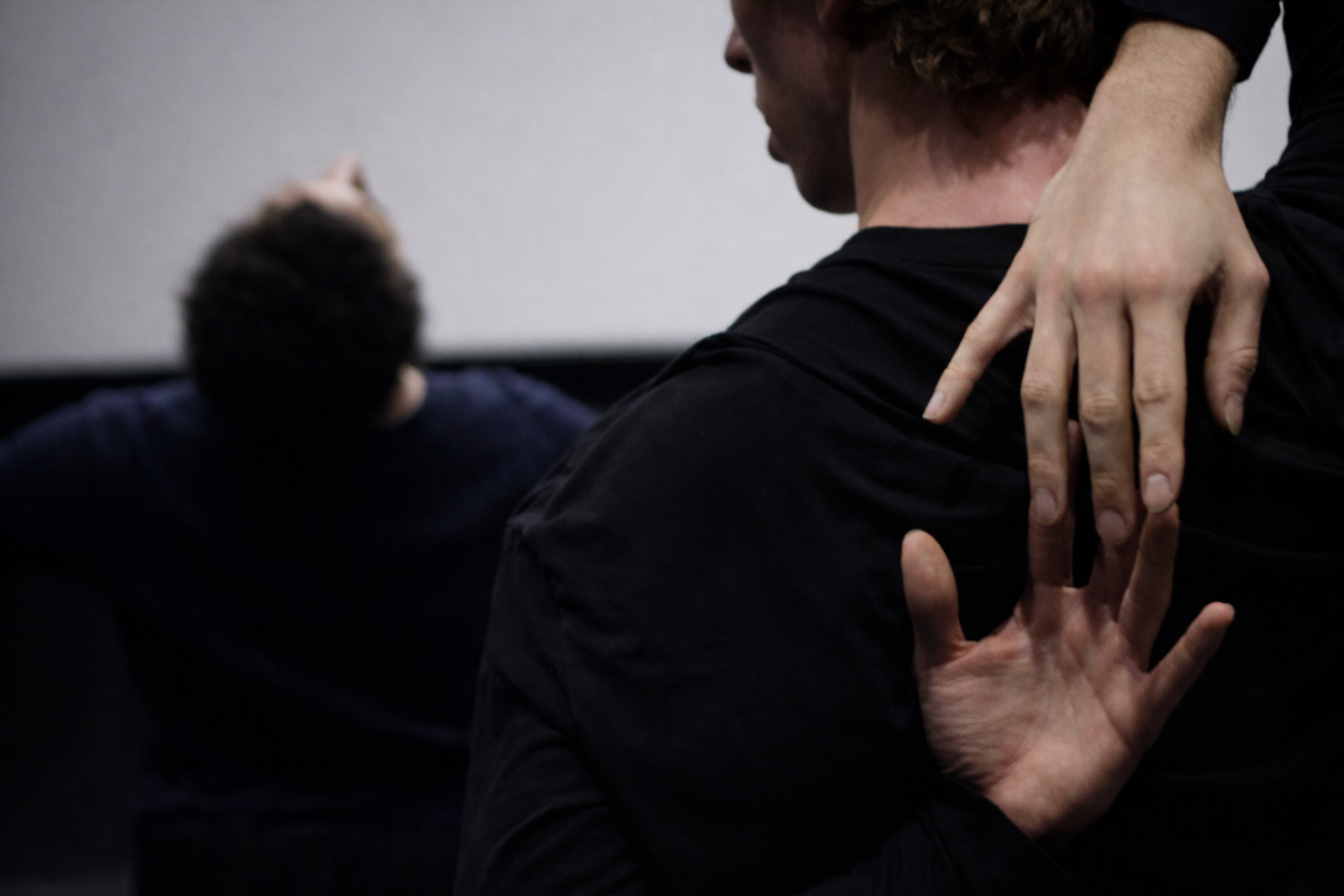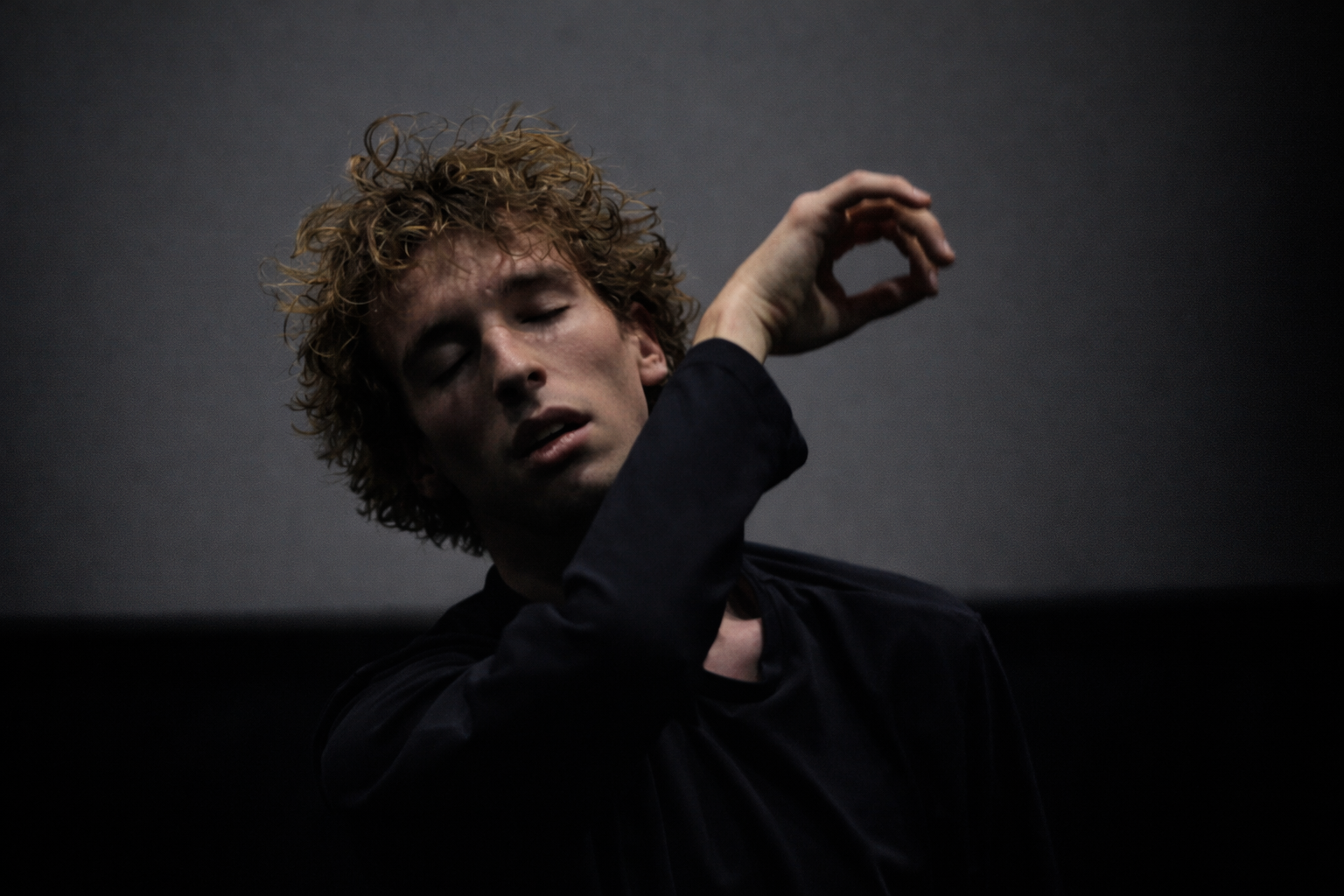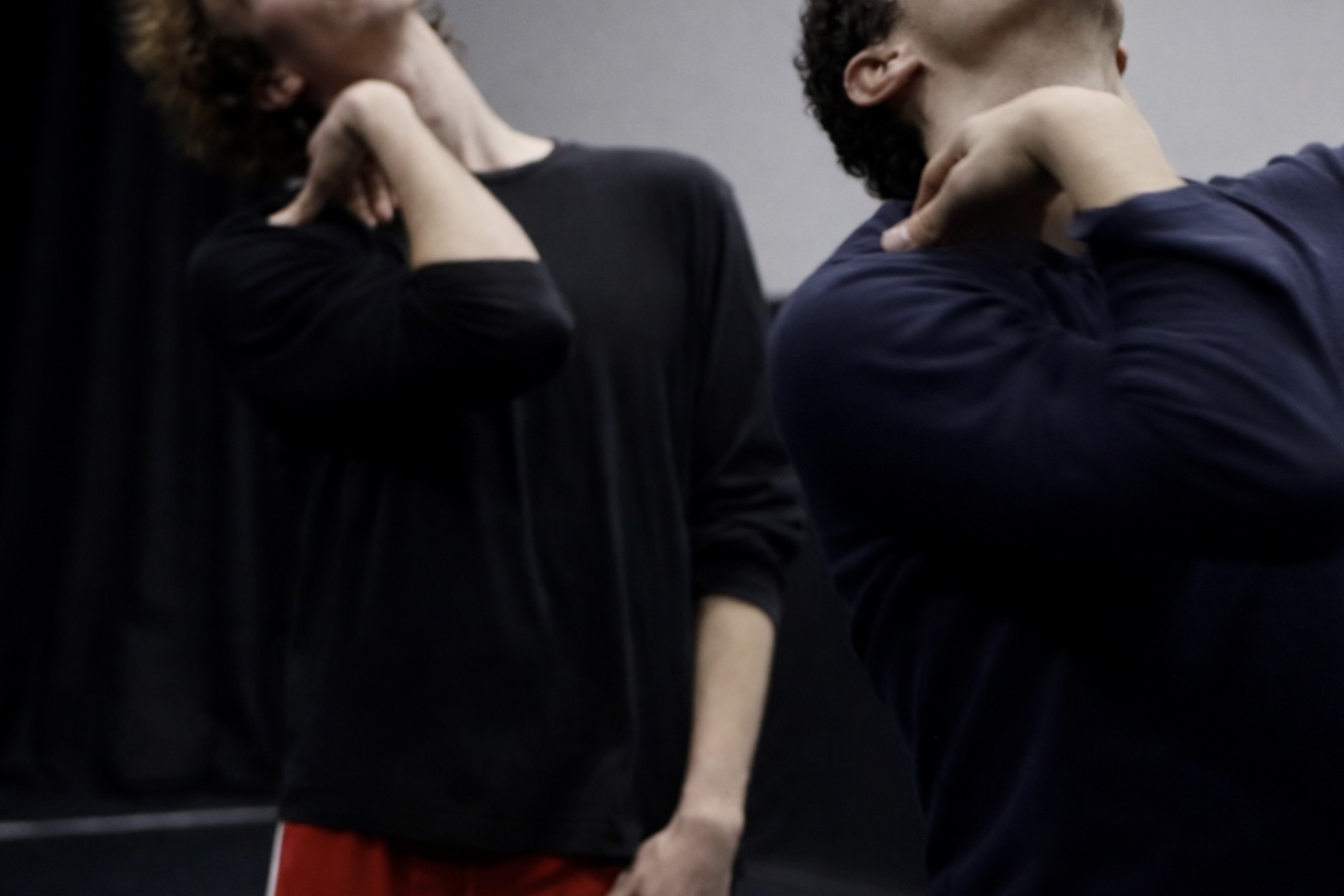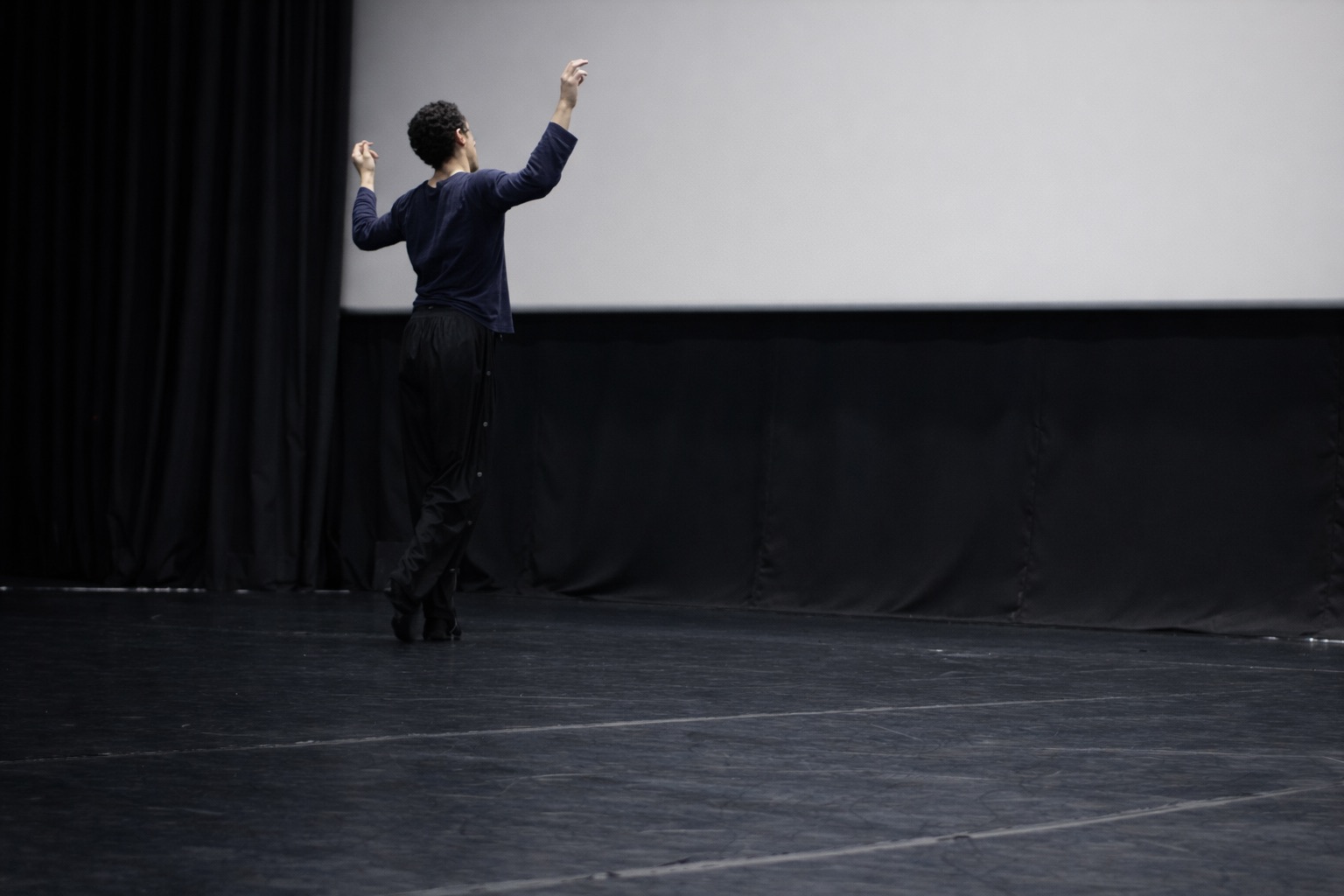



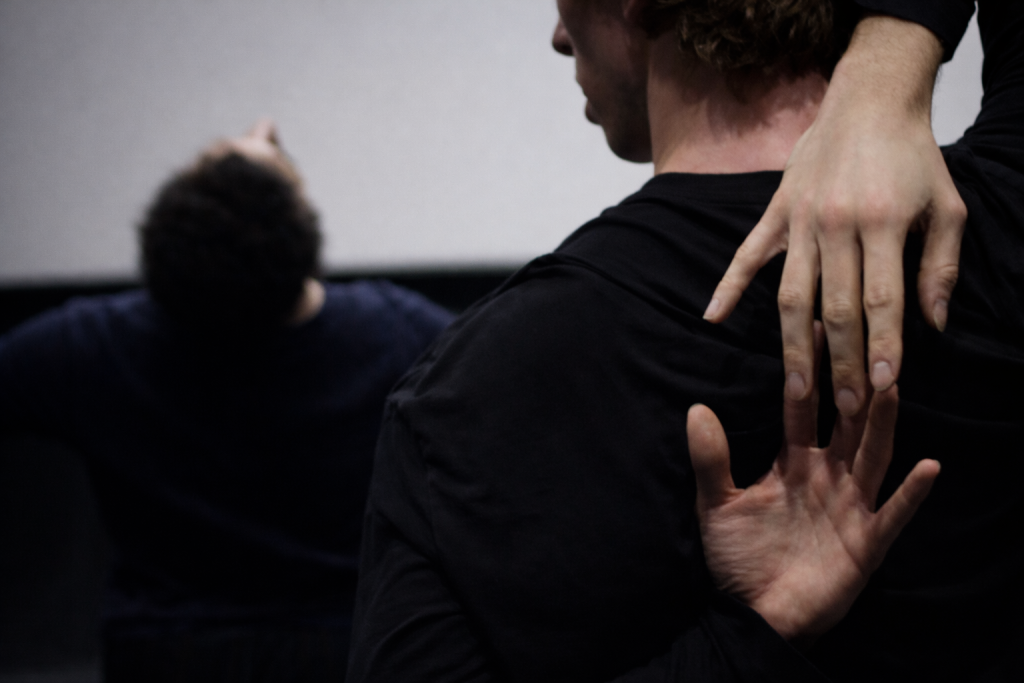
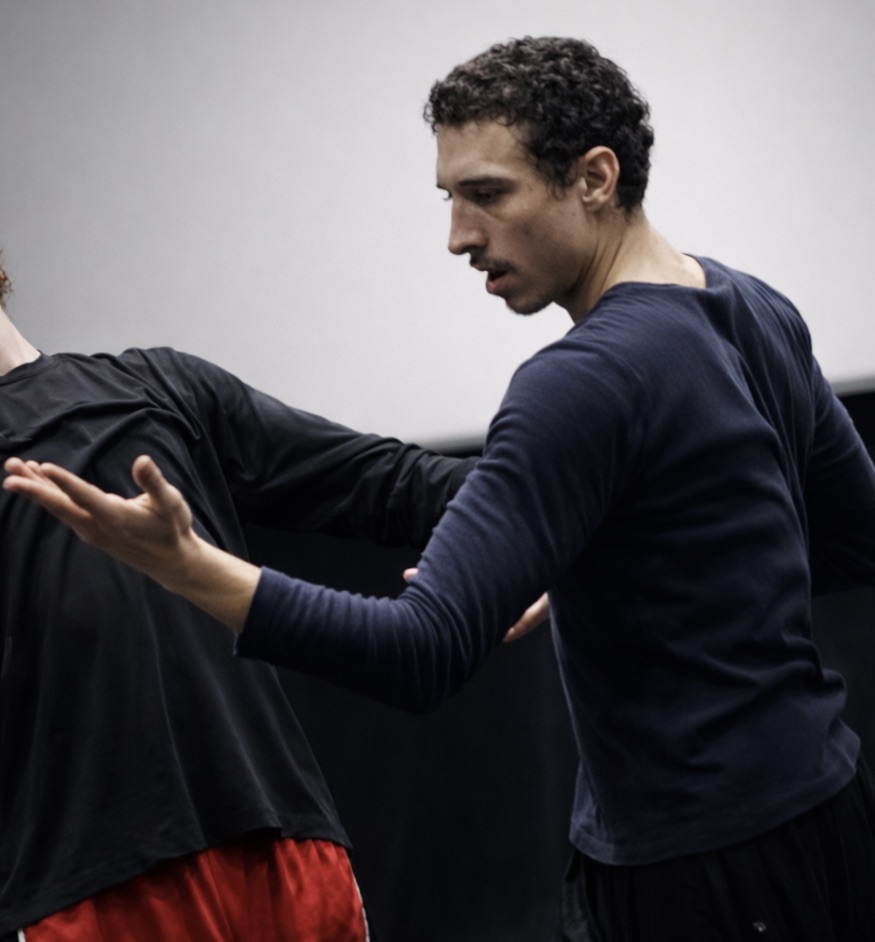
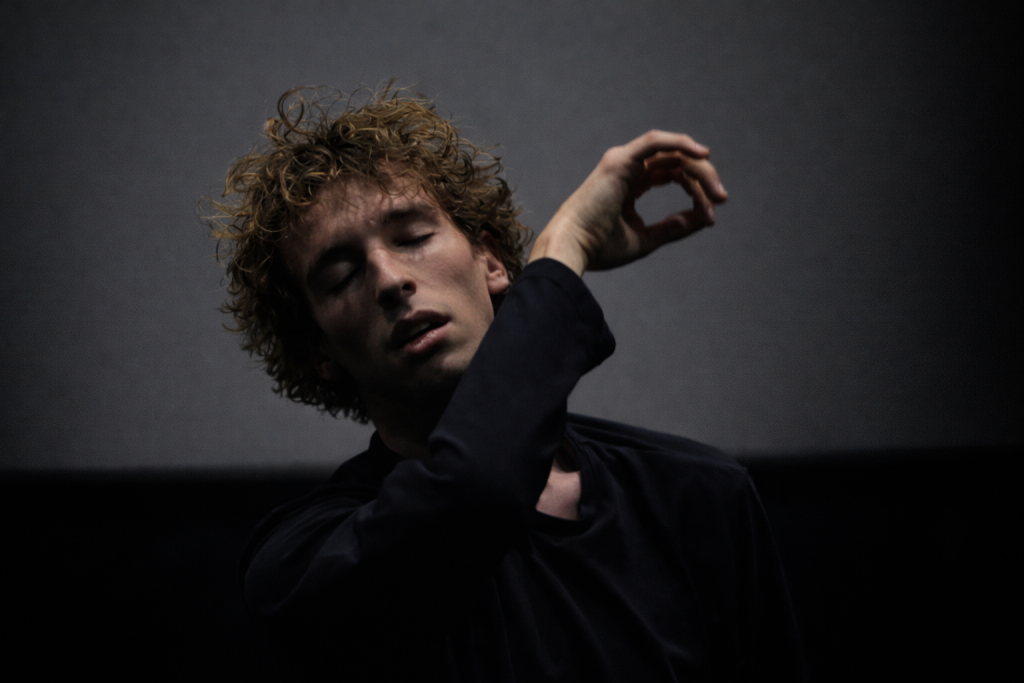
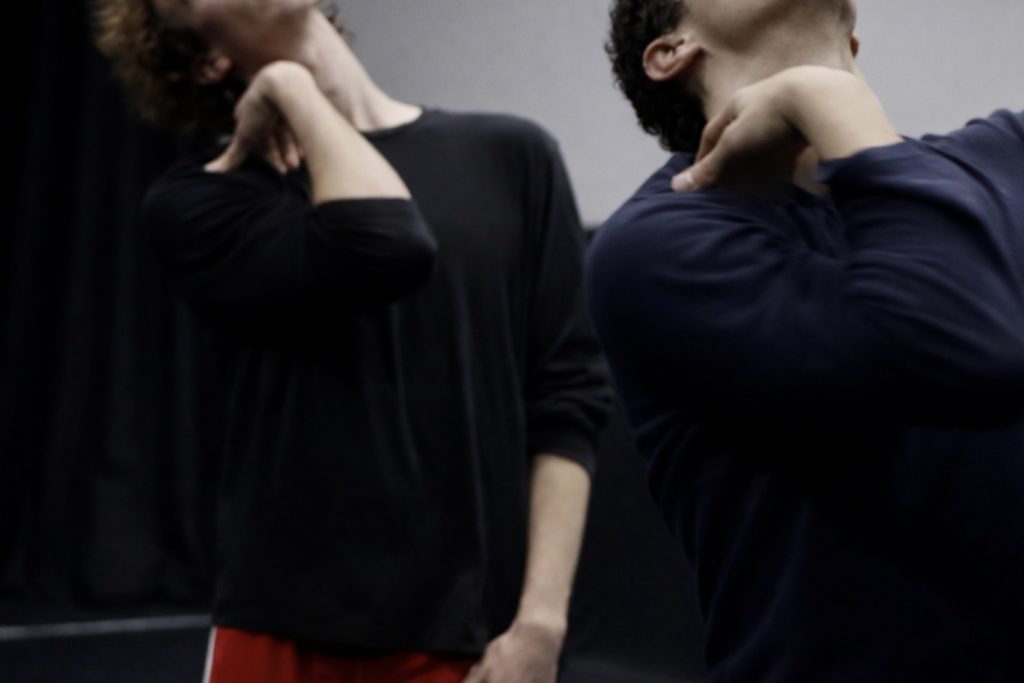
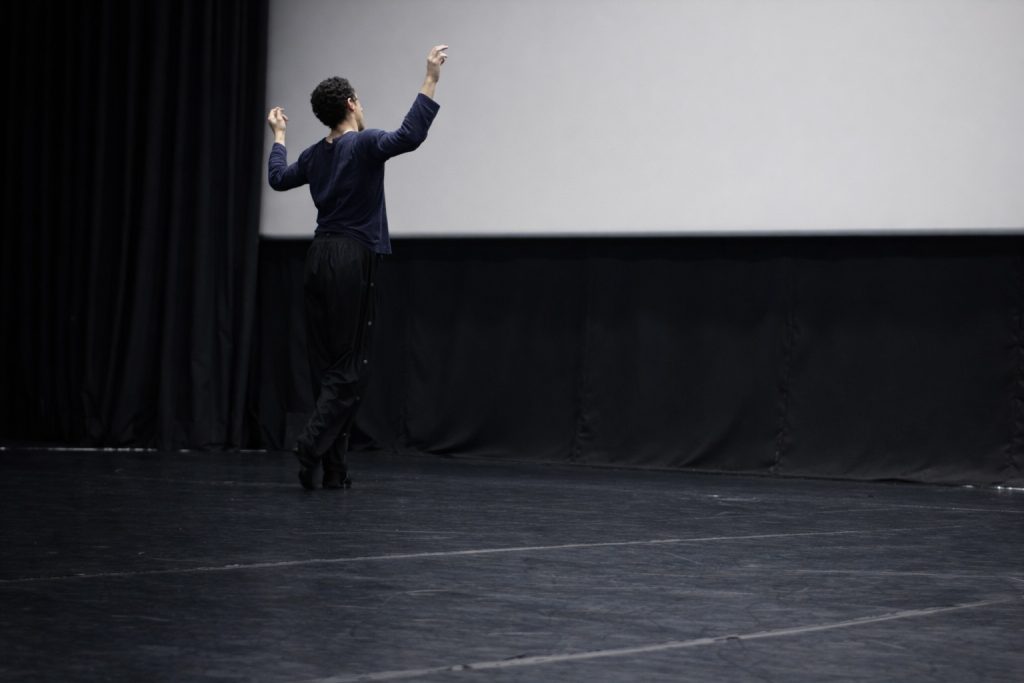
Giacomo Luci, an artist whose research moves between dance, thought, and scenographic writing, constructs with La Lalangue a work that delves into the less domesticated zones of language and the body. Inspired by Roland Barthes’ reading of Rasch on Robert Schumann’s Kreisleriana cycle, the creation does not seek a choreographic translation of the text, but rather inhabits its internal tension: the fracture where language ceases to be code and returns to being matter, impulse, vibration. Rather than an exploration of meaning, La Lalangue moves in proximity to what precedes articulation: a pre-individual, affective, and pulsional territory in which the body does not represent but reacts, allows itself to be traversed, enters into crisis. What emerges is a writing that disrupts choreographic codes to let rhythm, jouissance, and deviation surface, as if dance were seeking not a form, but the point where form begins to undo itself.
Giacomo Luci is a dancer, performer, and choreographer. He began his career as a soloist at the Teatro dell’Opera di Roma and later joined the Opéra de Lyon, engaging with the language of contemporary dance and performing works by Forsythe, Bausch, Cunningham, Childs, and Brown. He collaborates as an actor and dancer in film and institutional productions, working with choreographers including Benjamin Millepied, Dimitri Chamblas, and the Bullyache collective. Since 2018, he has been developing his own choreographic research, which has been presented at various contemporary performance festivals.
Choreography and direction Giacomo Luci
Dancers Giacomo Luci and Pierre Loup Morillon
Pianist Beatrice Barison
Live music Kreisleriana, Op. 16: Fantasies for Piano by Robert Schumann
Lighting design Antonio Colaruotolo
Costumes Chiara Ficola
Production Daniele Cipriani Entertainment, curated by Anna Lea Antolini
Photo and video material Laurent Poleo-Garnier
Special thanks for hosting the artistic residency to Teatro Valentino Garavani in Voghera, ATCL/Spazio Rossellini in Rome, Espace Pasolini laboratoire artistique in Valenciennes, and Teatro dell’Unione di Viterbo.
Giacomo Luci and the production would like to thank Amanda Lana.
SIAE music clearance Romaeuropa
Author Robert Schumann
Title Kreisleriana
Duration 35 min